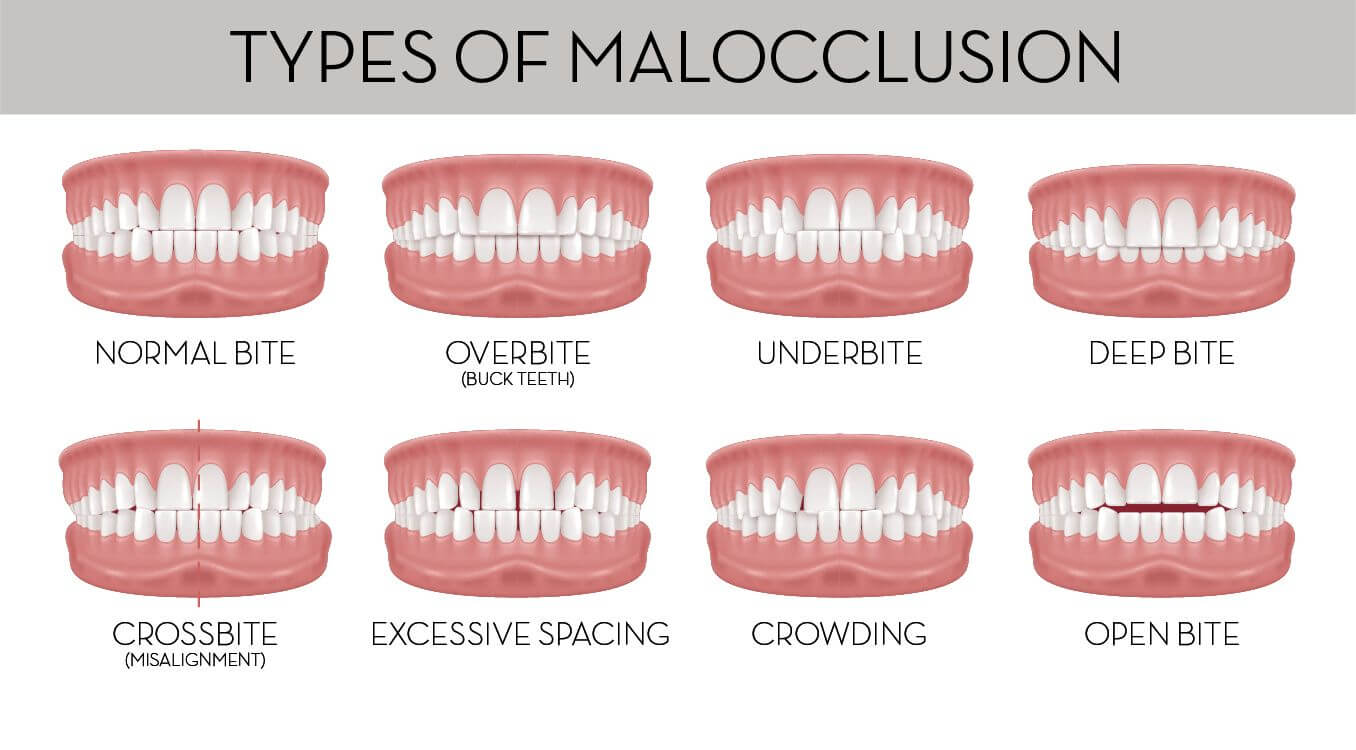
Bite problems, or occlusal dysfunction, often exist from early development, but they may also occur over time due to bite shifting or other factors that come with aging.
This happens when teeth, muscles, and joints no longer work together as they should. The changes may start slowly, but they can affect your comfort, appearance, and long-term dental health.
Why Teeth Shift With Age
As you age, enamel wears down, bone density changes, and teeth may move slightly. Habits like clenching, grinding, or uneven chewing can accelerate this process. Missing teeth or old restorations that no longer fit properly also cause neighboring teeth to drift out of alignment.
Early Signs to Watch For
- Teeth that feel loose or look slightly misaligned
- Difficulty chewing or feeling your bite “off”
- Jaw pain, headaches, or muscle tension
- Clicking, popping, or stiffness in your jaw joints
- Uneven wear or sensitivity on certain teeth
These symptoms often go unnoticed until significant damage occurs.
Early Detection Matters
When caught early, occlusal dysfunction can often be corrected with simple, conservative treatments. Ignoring it allows the imbalance to worsen, leading to cracked teeth, gum recession, or chronic TMJ pain. Regular exams and bite evaluations help detect these shifts before they become serious.
Personalized Treatment Options
- Bite adjustments to even out high contact points
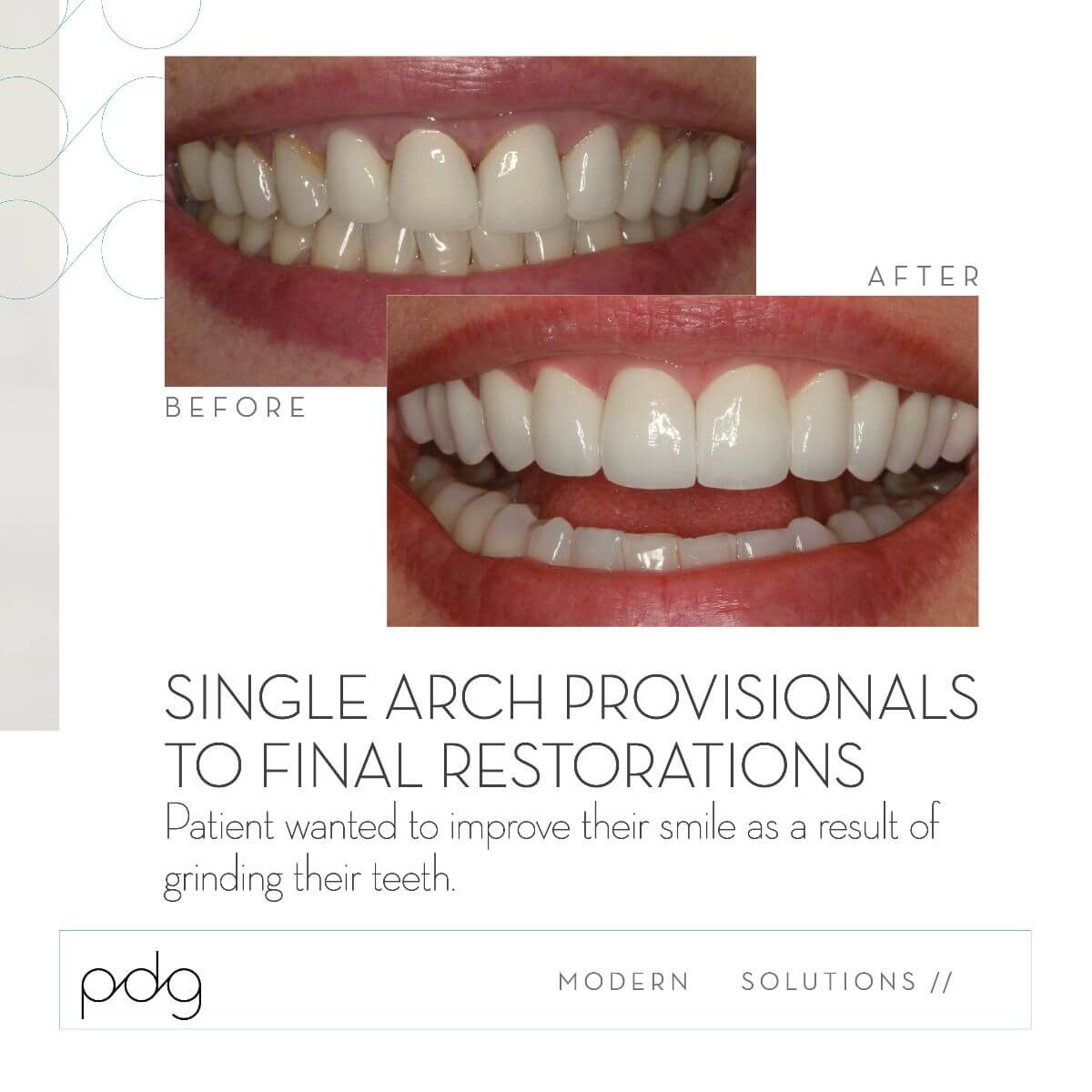
- Custom nightguards to prevent grinding
- Orthodontic realignment or restorations for balanced function
- Rebuilding worn teeth to restore your natural bite
We tailor solutions to your need. A balanced bite keeps your smile comfortable, stable, and healthy for years to come.
Protect your bite before problems start. Schedule a comprehensive exam at PDG Dentistry today.